

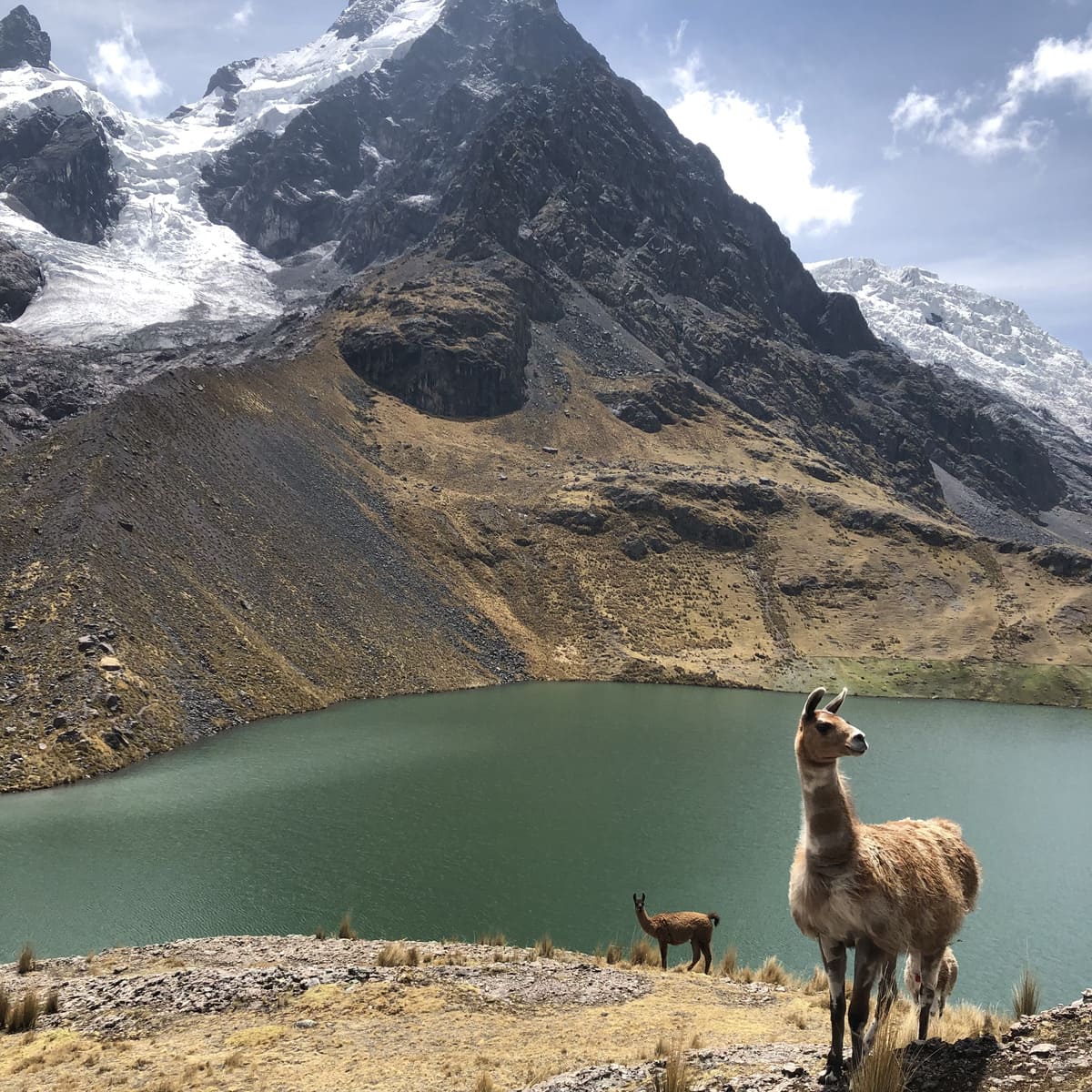
One of Cusco’s most underrated multi-day hiking circuits, the Ausangate trek to Rainbow Mountain is quickly growing in popularity – and for good reason too.
From experiencing raw Andean cultures and customs to visiting emerald green lakes and multicolored mountains without the crowds, I certainly felt like it ticked all of the boxes for a solid hiking circuit.
Below in this article I’ll share my experience hiking the Ausangate trek to Rainbow Mountain with one of my clients AB Expeditions, everything that I learnt, and why travellers should consider adding this spectacular hike to their plans within Cusco.
Check Out My Vlog Hiking The Ausangate Trek To Rainbow Mountain
Below you can see the full hike I went on, which includes all of the destinations visited, amenities, food included as well as what to expect.
My Full Experience Hiking The Ausangate Trek
After hiking several high altitude hikes around Peru in the last few years, I quickly learnt that myself and altitude are not the best of friends. My infamous attempt at climbing the summit of Chachani in Arequipa (6057m) quickly springs to mind – which ended up with me vomiting and unable to walk for 7 hours, sitting at basecamp alone while the rest of the group and guides trekked up and down from the summit.
Knowing that Ausangate was above 5000m at certain points, this time I made it my mission to prepare as best as I could so this time would go more smoothly. After previously hiking the Inca Trail to Machu Picchu with AB Expeditions, I was excited to go with them again since they focus on authentic culture, have great trekking guides and also prepare some really good hearty meals.
Below I’ll share my personal experience hiking the Ausangate Trek, including any highlights and surprises that I found along the way.
Day One Of The Ausangate Trek
Like the majority of multi-day treks in the region, pick-up in Cusco was very early in the morning. This allowed for some extra sleep in the van for a few hours, until we reached the remote settlement of Upis Pampa for breakfast and to begin the trek.

The trailhead begins at roughly 4200m in altitude, and the first day was a gentle horizontal walk without much gain – which is perfect for getting into the swing of things without discomfort. Along the trail we saw giant herds of Alpacas and Llamas, a small alpine lake as well as the snowy Ausangate looming in the background.
Arriving at the Upis campsite for lunch, we then immediately walked up to the crystal-blue Upis Lake which has beautiful glacier views and some pre-Inca ruins which you can walk in and around.

We then returned for dinner, and at night I took advantage of the natural hot springs in town – which despite the initial burns and freezing exterior temperatures – quickly became the highlight of my day.
Day One Stats:
- Rough Footsteps Walked: 22,000
- Hours Walked: 6
- Highlight: Upis Lake
Day Two Of The Ausangate Trek
I awoke very early on day two to some irregular grass-stomping just outside of the mountain cabin. After heading out around 5:30am to see what it was, I was greeted with a massive herd of Alpacas and Llamas, as well as an unforgettable sunrise over Ausangate.

This would then set up the day perfectly, where we would hike up and over Arapa Pass (the first of three mountain passes on the route), and have lunch at the iconic, emerald-green Puca Cocha lake.
Day Two was by far my favourite day of them all, as you would really feel lost in the Andes, walk along crashing rivers, and have up and close views of giant snow mountains. We also saw some Vizcachas hopping between rocky boulders which was great.

After hiking the second pass of Puca Cocha, we would then traverse multicolored mountains until we reached our campsite of Ananta for dinner and an early night sleep.
Day Two Stats:
- Rough Footsteps Walked: 25,000
- Hours Walked: 9
- Highlight: Wild Andes Landscapes
Day Three Of The Ausangate Trek
As I mentioned previously, I really don’t get on well with altitude – and this is where things got tough on Day Three.
Waking up at Ananta at roughly 4915m in elevation, I was already going through many unwanted symptoms like headaches and nausea – however I knew that drinking Coca Leaf and continuing on would help as the day went on as we headed towards Rainbow Mountain.

We then left around 5:00am in the dark to begin our hike up the final third pass of Warmisaya. I had to stop frequently and walk very slowly, but finally made it up just as the sunrise floated over the Andes.
After several more hours of hiking, we then finally reached the star highlight of Rainbow Mountain. While the rest of the group also went to the Red Valley, I sat out as my knee was hurting – but instead enjoyed the views of this iconic wonder. We then took our transport back to Cusco, enjoying a classic Pachamanca at a local restaurant along the way.

Definitely one of the more memorable hikes I’ve done around Peru for both cultural immersion and scenic landscapes, and a great way to finally manage high altitude in style this time.
Day Three Stats:
- Rough Footsteps Walked: 12,000
- Hours Walked: 4
- Highlight: Rainbow Mountain
Important Things To Know About Hiking The Ausangate Trek To Rainbow Mountain
Is It Worth Hiking The Ausangate Trek?
Yes, the Ausangate Trek is definitely worth adding to your plans in Peru – and for multiple reasons.
Firstly, it’s one of the few multi-day treks in Peru that still feel authentic and untouched. While the famous Inca Trail to Machu Picchu is renowned for ancient ruins and the Salkantay Trek for its giant glaciers, both can feel somewhat touristy nowadays with multiple groups on the same trail.
However during the Ausangate Trek we can feel like we are truly within the deepest and most remote area of the Andes, meet indigenous locals along the route, and also see wild herds of Alpacas and Vizcachas hopping between boulders.
The other reason to hike Ausangate is, of course, for the incredible landscapes along the trek. This includes glacial lakes and snow-capped peaks that tower above you during the route, as well as the otherworldly red and multicolored peaks as we head deeper into the trek after Apachata Pass.
Proper Acclimation Before In Cusco
It’s vital to know that the Ausangate hike cradles on average between 3500-4500m in altitude, although some parts at the end rise over 5000m in elevation. This can put a lot of stress on your body and cause altitude sickness if not prepared, so it’s important to spend at least two days (ideally 3-4+) in Cusco before starting your trek. This will help your body adjust naturally – while medications like Diamox or Coca Leaves will further help you to avoid getting any symptoms during the trek.

Choosing The Right Season For Your Goals
The dry season (between May and September) is the very best for hiking Ausangate, as trekking conditions are ideal with minimal chance of rainfall. Temperatures will be coldest though, so packing properly is important – although being honest they are cold all months of the year during the evenings. The only sizable difference of going in the wet season is that there will be intermittent showers, and even fewer tourists hiking the Ausangate route.
Packing Properly For Your Trek
As mentioned in the last section, Ausangate will be cold in the mornings and evenings regardless of the month you choose. This means that thick jumpers, a coat, hat and gloves are all essential, and also a rainproof jacket if heading between the months of October and April where showers are most likely. Solid hiking boots are also very important – as the trail can include loose dirt or uneven slopes – which will help you keep your balance and avoid tripping during the hike.
Overview Of Hiking The Ausangate Trek
And that’s all for this article on my experience hiking the Ausangate trek to Rainbow Mountain.
Overall this multi-day route in the Cusco region is perfect for alpine wilderness and high altitude scenery, where you can enjoy multi-coloured mountains, spot Andean fauna like the Vizcacha and Vicuña, as well as meeting traditional indigenous groups along the trail.