

From diving deep into the legendary Inca’s legacy, to exploring the fascinating earlier Moche and Caral cultures – Peru ruins are an essential add-on to any trip around the country.
Mysterious structures and sprawling temples can be found in all regions of this South American nation, such as along the Pacific Coast, in the middle of the harsh deserts, within snowy Andean peaks, and also hidden deep within remote cloudforests and jungle. And having visited dozens during my time both travelling and living here in Peru, I can say that it is one of the very best ways to make any trip here much more memorable and intimate.
Below in this article I’ll share some of the very best Peru ruins that I have explored. This includes what makes each structure unique, as well as some tips from experience to make your visits both the most memorable and simple at the same time.
Why Peru Ruins Are Worth Visiting
Peru’s ancient human history is arguably one of the oldest in the entire Western Hemisphere – which began some 5000 years ago when the Caral culture began forming the first-known simple civilisation just north of Lima.
Over the next several thousands of years, new and highly adapted groups would form and thrive in all corners of the country. And given just how perfectly-preserved many of Peru’s ruins are – this means we can enjoy a variety of otherworldly structures and have a much more immersive learning experience.
The surrounding scenery and style of ruins can also vary highly – making it perfect for incredible visuals. For example, on the coast we’ll find various giant adobe pyramids built by civilisations like the Moche and Caral. Within the Andes, we can head on some of Peru’s most incredible hikes and see ancient ruins along the way such as those around the Inca Trail and near Huaraz. And around the high Amazon Jungle and cloudforests, we can find more unorthodox creations such as the Karajía Sarcofagi near Chachapoyas (which sit on top of a mountain and house the remains of their elite tribe leaders).

6 Of The Most Incredible Peru Ruins To Explore
Below we’ll now take a look at some of the very best Peru ruins that I’ve visited during my time here, and why each one deserves to be on your own itinerary.
Caral (Supe, The Pacific Coast)
The oldest site of human civilisation in the entire Americas, Caral is a truly fascinating site to visit – both for its deep history and scenic desert pyramids.

It’s estimated that the Caral people formed the heart of their culture here some 5000 years ago, which allowed them to evolve from a nomadic tribe into a settled and advanced trading society. Well over 3000 people inhabited the site at its peak, which is located between towering dunes and sandy mountains in the Supe Desert. Here they would farm squash, beans and cotton – and trade with coastal communities for seafood and marine products.
Caral is located roughly three hours north of Lima, close to the town of Barrancas. You can either head on a guided tour, or use public transport to get here where you’ll also have a tour guide show you around upon arrival.
Sayacmarca (Cusco, The Andes)
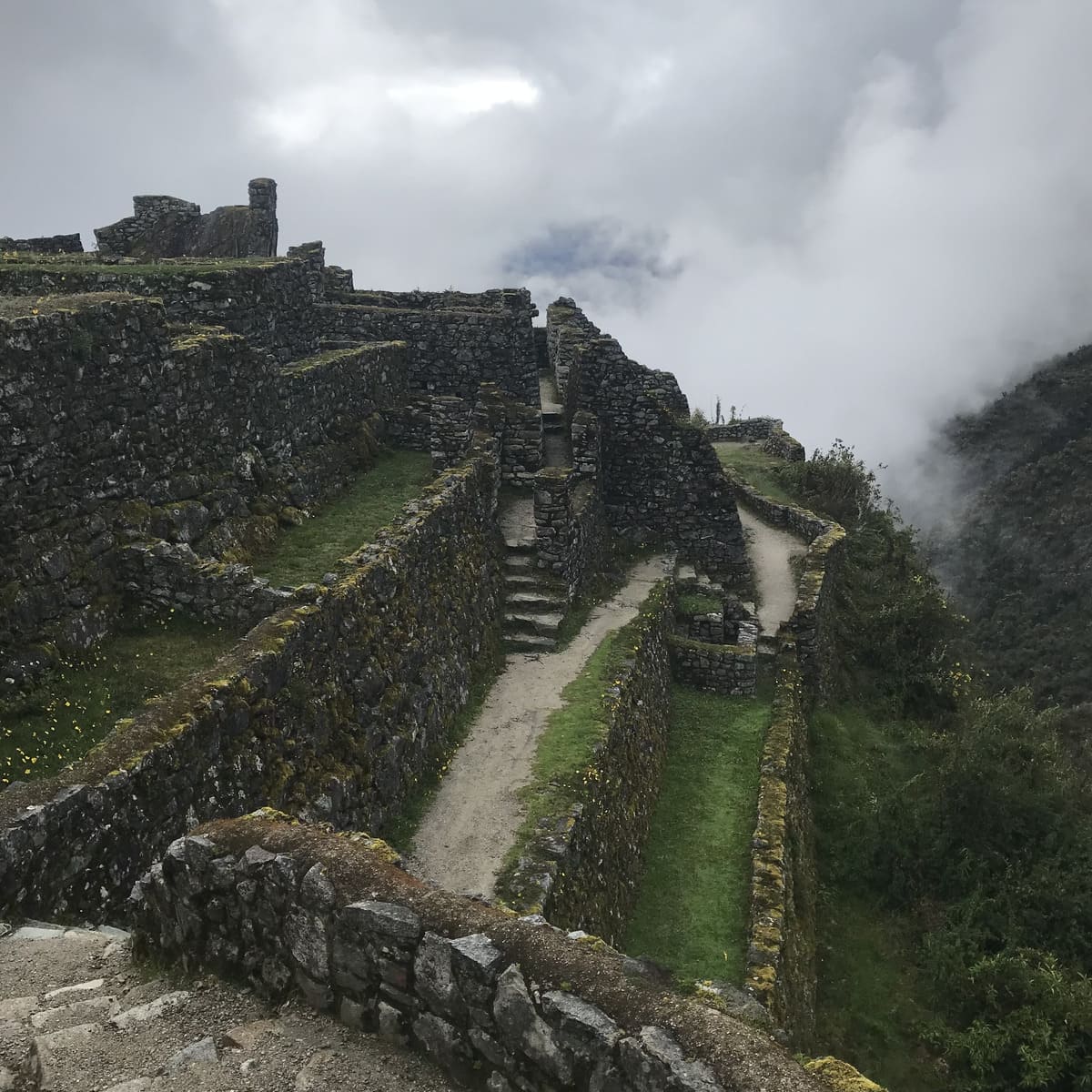
Now we head up into the remote cloudforests to the ancient Inca stronghold of Sayacmarca – which is by far my own personal favourite Peru ruins.

Located along the famous Inca Trail route which leads to Machu Picchu, Sayacmarca has a much more remote feel to the other ruins here – which even appears within its name (it translates as “Inaccessible Town” from Quechua). Located on the hanging ridge of a mountain and surrounded by heavy mists and deep cloudforests, it’s one of those kinds of sites that make it easy to disconnect from modern life and feel like you’re really stepping into the ancient era of the mighty Inca.
Sayacmarca is a protected site along the Inca Trail, and can only be accessed with the four day hiking trek permit – where you’ll also see many other Inca sites like Intipata, Runkurakay, and of course Machu Picchu.
Chan Chan (Trujillo, The Pacific Coast)
The massive site of Chan Chan was once home to over 40,000 people, and features massive 60ft walls that are entirely made out of adobe mud bricks.

Built by the Chimú Empire, Chan Chan was their most important site which featured advanced canal systems that ensured irrigation for crops – which was vital given the harsh arid climate here. While much of their practices revolved around peaceful connections with the sea (which can be seen in their motifs and carved decorations on walls), recent excavations have found Chan Chan to have one of the largest child and camelid sacrifice sites on the planet.
Chan Chan is located just outside the city of Trujillo (near the small beachside town of Huanchaco), which is some 8 hours north of Lima. Despite its large size and popularity, entries can easily be bought on-site without booking in advance.
Machu Picchu (Aguas Calientes, The High Amazon Jungle)
The crowning jewel and most visited site in all of Peru, Machu Picchu is the star highlight of any itinerary for travellers heading to this iconic South American country.

Unlike other Peru ruins which served important strategic or organisational functions, Machu Picchu was primarily built as a resort for the Inca leader Pachacútec around 1450 A.D. Here the most noble and elite classes could escape the noise and bustle of Cusco, and head into the lower altitude cloudforest – which also benefits from its nearby hot springs in Aguas Calientes. Most fascinatingly, once the Inca abandoned the site to retreat from the Spanish Empire, thick jungle then quickly covered the citadel – and meant it was never discovered during colonial rule.
Machu Picchu is located roughly 3-5 hours away from Cusco, and can only either be reached by train, a combination of buses and walking, or by hiking the incredible Four Day Inca Trail Trek within the region.
Huaca Pucllana (Lima, The Pacific Coast)
Did you know that we can find ancient ruins right in the heart of Lima – which is surrounded by modern skyscrapers and towering buildings?

Huaca Pucllana was built by the pre-Inca Lima culture roughly 1800 years ago, and has quite the interesting past. These staggered Adobe terraces were reserved only for the most noble classes of the Lima people, and human sacrifices of young women were once common practice – as a way to appease gods and bring vital water supplies during the extreme droughts that the region faced. Huaca Pucllana would then be abandoned around 700 A.D, and later occupied by different cultures such as the Wari, the Ychsma, and the Inca.
Visiting these ruins is easy given they are just a 10 minute walk from the Kennedy Park in Miraflores, where travellers can enjoy their first taste of ancient Peru ruins with ease.
Kuelap (Chachapoyas, The High Amazon Jungle)
Once home to the formidable Chachapoyas culture, the “Sky Warriors” turned this site into one of the most defensively impenetrable fortresses in all of Peru.

While the most popular Peru’s ruins are in the southern and central regions of the country, Kuelap offers a refreshing experience in the lesser-visited Chachapoyas region – which I personally think is one of the very best places to explore in Peru during your trip here. Known for its surrounding rolling high Amazon valleys, Kuelap is much larger than Machu Picchu – and has colossal stone walls all around it which are as high as 65ft. Despite housing over 3000 people and eventually falling to the Inca, Kuelap were able to resist Inca sieges for over 60 years – and even then the Chachapoyas people never fully assimilated into the Inca civilization, and instead maintained their unique identity and ways.
Getting to Kuelap is a memorable experience in itself, where you’ll first take a two hour shuttle ride from Chachapoyas to a nearby mountain – followed by a scenic cablecar ride over to the ancient site.
The Nazca Lines (Nazca, The Pacific Coast)
Now we head back to the desert plains of the Pacific Coast, and this time to the Nazca Lines – which were created by the Nazca culture 1500-2500 years ago.

Arguably one of the most scenic and mysterious sites in all of Peru, the Nazca Lines are made up of more than 300 giant hieroglyphs that represent various ancient deities from this civilisation. This includes the Dog, the Whale, the Condor and the Spider – which were believed to have been created in order to appease their gods and bring much needed rains to this incredibly arid region. However, unlike other sites, minimal findings mean that their true purpose still remains unknown to this current day.
It’s best to visit the Nazca Lines with an overflight tour which departs from the city of Nazca, where you’ll get incredible overhead views of each hieroglyph in a small plane.
Expert Tips For Visiting Ancient Ruins In Peru
Etiquette Of Exploring Ruins
As you can imagine, decades of hard work and painstaking efforts went into rediscovering and carefully excavating these abandoned sites.
This is why following the rules of each ancient Peru ruins is vital, which helps to keep the ruins preserved for future generations to come and explore. Many of these etiquettes are based around not walking where you shouldn’t, which again prevents irrevocable damage being caused.
However the rules are also in place for your own safety – given accidents and even deaths have occurred when tourists decided to pass the safety ropes or ignore local advice.
Learning About Peru’s Ancient History Before You Enter The Ruins
This advice is one that I myself failed to follow during my first visits to ruins in Peru, and as a result I have quite a lot of nice photos – but not a clue of what they were actually of at the time.
If the idea of visiting a museum before seeing epic ruins bores you, I completely get it. However, trust me when I say that visiting a museum before exploring these sites in Peru is much better – given they will help you to picture how each site was used, and better connect with each set of ruins. Many of Peru’s museums are also very interactive and have all kinds of mesmerizing artifacts and remains all on display.
The very best site is Larco Museum in Lima, which is arguably the most comprehensive museum in all of Peru – although most ruins also have their own dedicated museums right next to each site.

Personal Preparation Before You Visit Ruins In Peru
After you’ve learned a little more about the ruins (and will actually understand what you are seeing), the last step now is to make sure that you yourself are prepared when heading out to each site.
Many of these ruins are located either outside or in remote harsh terrains, and you may end up spending a lot of time in strong sunlight (especially along the coast and within the Andes).
For this reason you’ll want to apply sunscreen and bring lots of water to keep yourself well hydrated during your visits. You’ll also want to make sure you have comfortable walking shoes, a fully-charged phone/camera as well as a map for the bigger sites if necessary.
Pre-Booking Your Peru Ruins Entrance Tickets
Many of Peru’s ruins have become really popular nowadays, which means it’s ideal to visit early in the day to avoid the crowds. Even then, some can end up having long lines – however you can avoid wasting time by buying your tickets in advance for certain sites.
Machu Picchu is a classic example, so it’s worth buying your tickets online beforehand. It’s important to know that this ancient citadel is located quite a few hours away from Cusco, so you’ll need to take buses and walk a few hours to get here (so it’s best to stay overnight in nearby Aguas Calientes and head up early the next morning).
Various other ancient Peru ruins would also best be visited with guided tours given their remote settings. One is Caral Ruins from Lima, which was the oldest ever civilisation in the Western Hemisphere, while the difficult-to-reach Kuelap Ruins from Chachapoyas is another.
Overview Of The Very Best Peru Ruins
And that’s all for this guide on the best ruins in Peru that are worth visiting.
With thousands of years of incredible ancient history, Peru has a deep passion for preserving its old ways – which can be best seen through its various ruins and archaeological sites across the country. Not only do these well-maintained sites help us imagine what life was once like throughout this South American nation, it also helps us to understand various traditions and indigenous cultures which still remain well and truly alive today.